

From battlefield tools to everyday tech: The rapid evolution of drones
From battlefield tools to everyday tech: The rapid evolution of drones
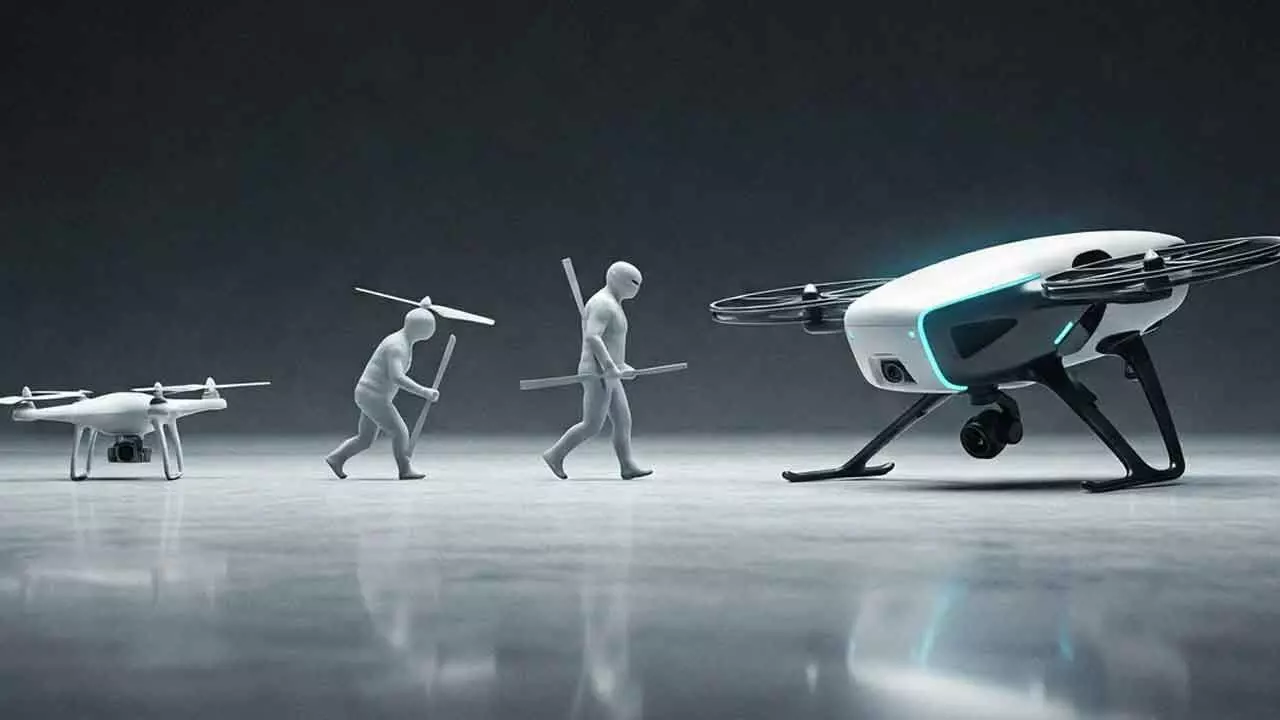
The future of UAVs (drones) points towards greater autonomy, integration, and widespread use, driven by AI, 5G, and machine learning, enabling complex tasks from autonomous delivery and urban air mobility (air taxis) to swarm operations in agriculture and logistics, alongside enhanced military/surveillance roles, all while focusing on sustainability, better sensors, and regulatory frameworks for Beyond Visual Line of Sight (BVLOS) operations, making them as common as smart phones.
Drones are currently in use in a wide swath of applications. Civil engineers often use them to perform remote visual inspections on bridges and structures that are difficult to reach safely. Manufacturing facilities and warehouses are already using drones for material handling.
They are often augmenting traditional machine vision with infrared and thermographic technology. The expectation is that the use of autonomous drones in security, surveillance, and rescue applications will grow.
Power is always an issue for drones and limits their operating range. The current limitation for the Amazon Prime Air drones is travel within a one-hour radius. Power is especially an issue for larger drones carrying passengers or heavy cargo.
Rechargeable lithium-ion batteries power many drones, which has been a good solution. Still, there is a need for better strategies for the future. Researchers are exploring other approaches for commercial drone batteries, including lithium-sulfur, hydrogen fuel cells, solar energy, lithium-polymer, and various hybrid techniques.
The size of drones will increase to handle heavier payloads or carry passengers in the future. That means more design will go into developing a better load-bearing structure without adding too much additional weight.
To meet these needs, designers must strike a balance between the drone’s weight (including electronics, battery pack, wiring, motors, and structure) and the power it needs to fly–not to mention the payloads it can carry. Additive manufacturing will enable the production of composite structures with highly customizable material properties, resulting in minimized weight and volume of material used.
Drone technology has evolved from basic military target practice tools in WWI to sophisticated AI-powered devices used in everything from defense and delivery to agriculture and entertainment, driven by advancements in sensors (LiDAR, thermal), AI for autonomy (computer vision, pathfinding), battery tech for longer flight, and lighter materials, moving from large, costly military hardware to accessible consumer/commercial models with enhanced safety, efficiency, and capability.
Drone innovation isn’t slowing—it’s accelerating. AI-powered automation, extended flight endurance, and advanced data analytics are redefining what UAVs can do. From autonomous deliveries to next-gen industrial applications, the boundaries are expanding fast.
Staying ahead means embracing the evolution. Whether you’re a drone professional or an enterprise looking to scale operations, now is the time to invest in cutting-edge UAV technology. The future of drones isn’t coming—it’s already here.
The global drone market is booming, projected to hit over $1.3 trillion by 2030, with military, commercial (agri-tech, logistics, surveillance), and consumer uses driving growth, led by China. India's market, while smaller (around $1.5B in 2024, growing to $1.3-4.8B by 2030 at ~20% CAGR), is experiencing explosive growth, focusing heavily on defense, agriculture, and infrastructure, supported by government initiatives (PLI, Digital Sky) and a push for domestic manufacturing (Make in India) to become a global drone hub.





